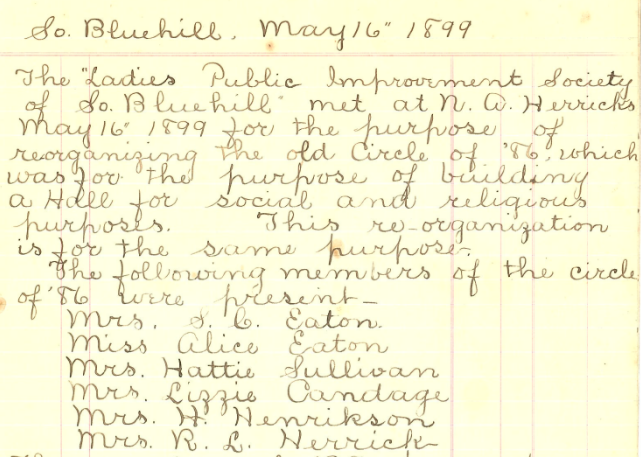
The first “Ladies Public Improvement Society of South Blue Hill” was organized January 27th, 1886, before going dormant. On May 16th, 1899, the group was re-formed under the same name. It was often referred to as “the Circle,” serving as a sewing circle and social circle. The group met regularly to work on projects, raising funds for the purpose of building a Hall “for social and religious purposes.”

Central Hall was built in 1901 for those purposes, and in the years since, the LPIS has maintained the Hall for neighbors and friends to get together for live music, community suppers, comedy shows, reunions, birthday parties, yard sales, ice cream socials, and much more.
“Americans have worked to transform their lives and the lives of their communities with myriad associations, including those for fellowship, mutual aid and benevolence, professionalism, labor, emergency services, reform, and community building. Together these efforts suggest in broad strokes the potential that the people of this country have aspired to fulfill.”
-Library of Congress, “A Nation of Joiners”
The Women’s Club Movement
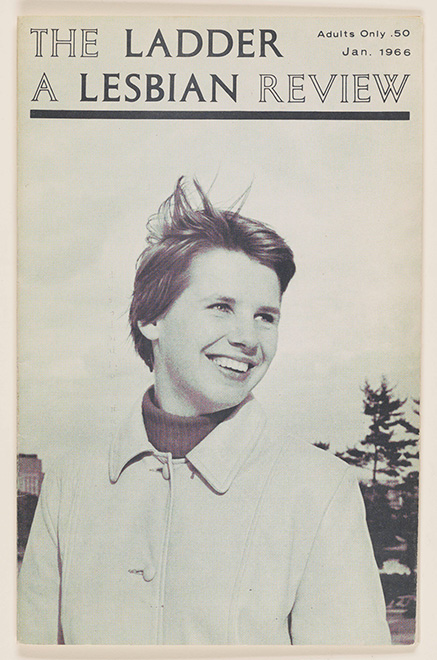
Many “women’s clubs” were being organized across America in the late 19th and early 20th centuries, beginning with “Sorosis,” founded in 1868 in New York as a group for professional women. As the Progressive era got underway, more and more women’s clubs and organizations were formed, often with a focus on public interest: charity, politics, and social reform. These clubs included “the National Association of Colored Women’s Clubs,” “the National Council of Jewish Women,” and later the Daughters of Bilitis. The women’s club movement continued to expand over the decades.
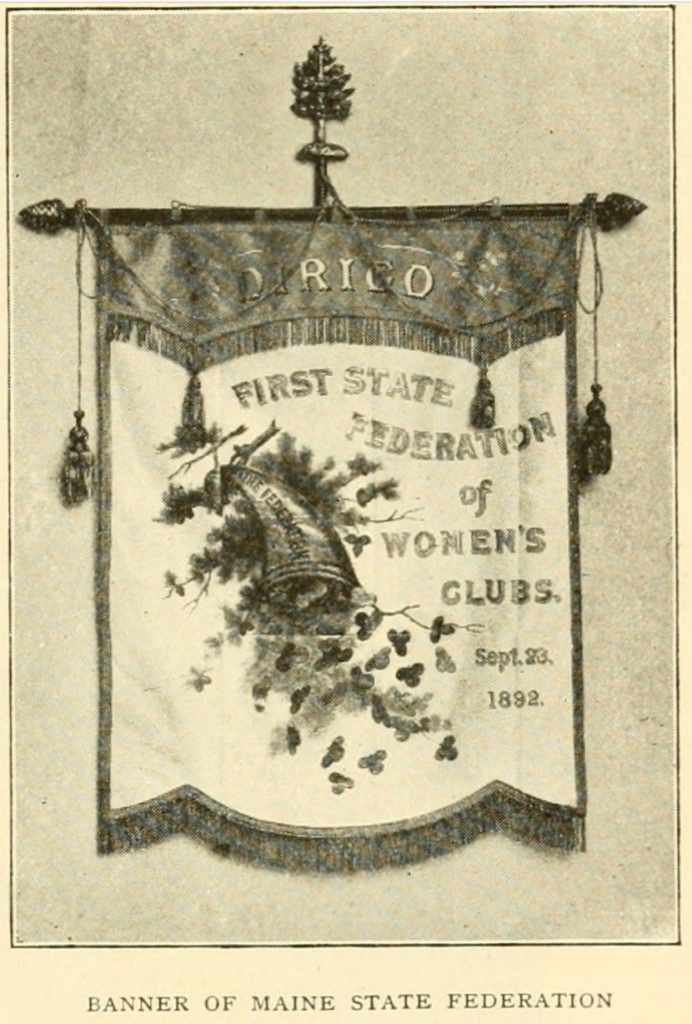
Maine was first to organize a State Federation of Women’s Clubs, in 1892. By the turn of the century, the federation had dozens of members, from “The History Club of Skowhegan” to “The Spinet Club” in Lewiston-Auburn, “The Fern Club” in Deering, and the “Wabanaki Club of Indian Island.” Many focused on educational reform issues, and successfully lobbied to build and fund libraries, expand summer school programs, and more. The Ladies’ Social Library, predecessor to the current Blue Hill Public Library, is another example of a women’s group that built something of lasting value to the community.
Our own LPIS met regularly throughout their early years, documenting the many sewing projects (mainly quilts and aprons) that they worked on to raise money for the construction of the Hall. Their minutes reflect that they held sales, dances, and dinners (just as we do today!), bringing in funds cents at a time until they were able to formally incorporate and construct Central Hall in 1901. It has been used as a community gathering-place ever since.
South Blue Hill
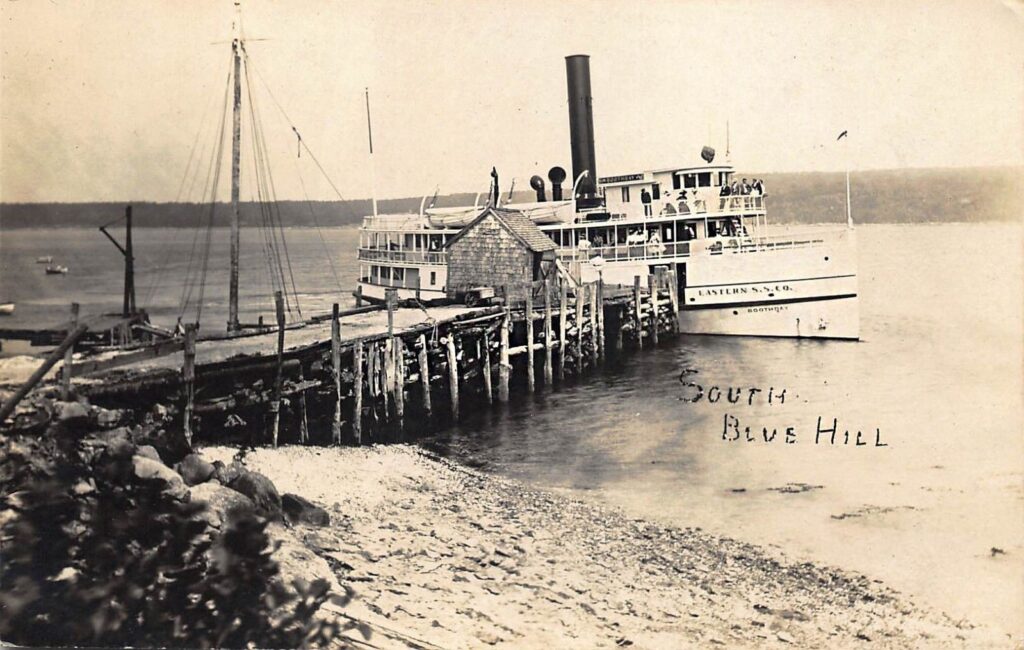
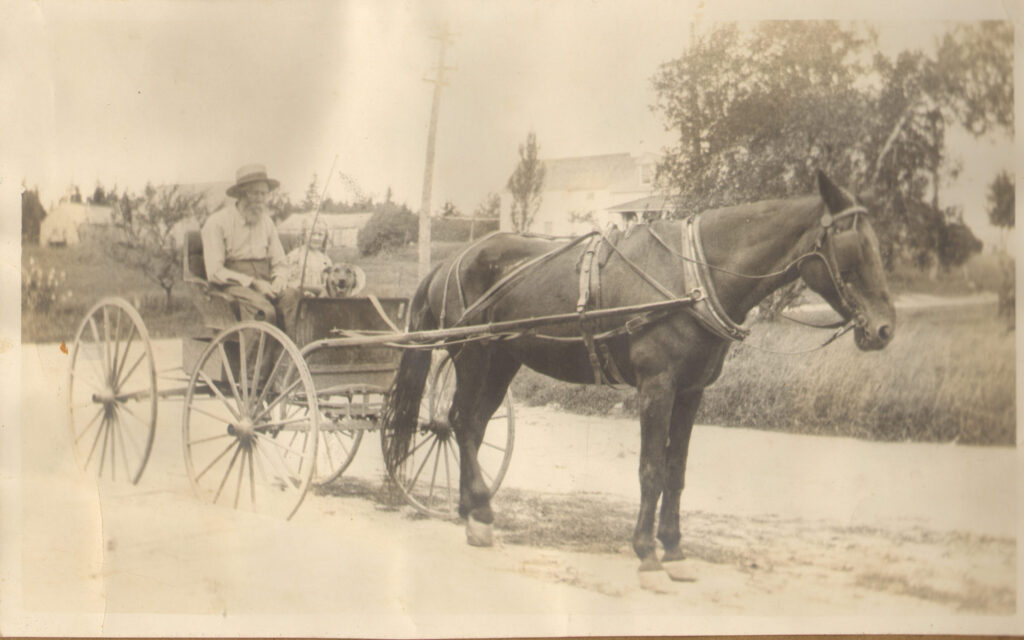
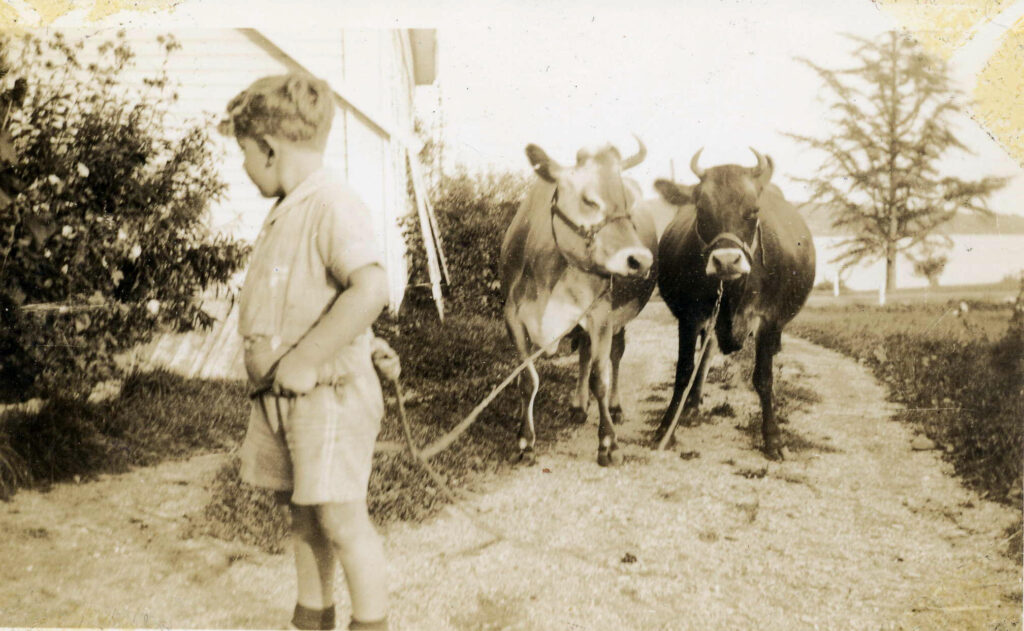
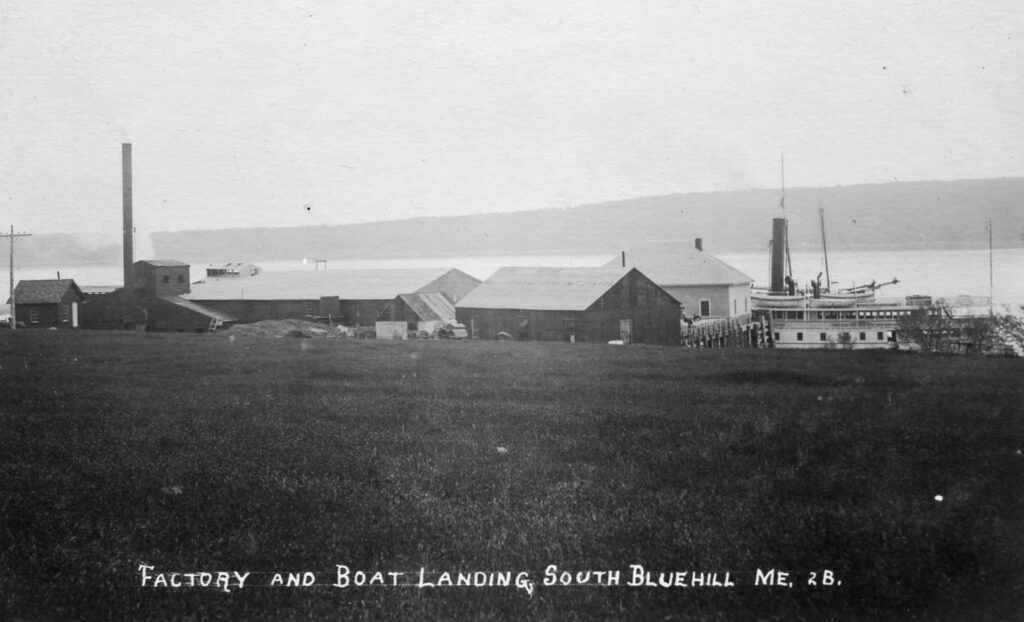
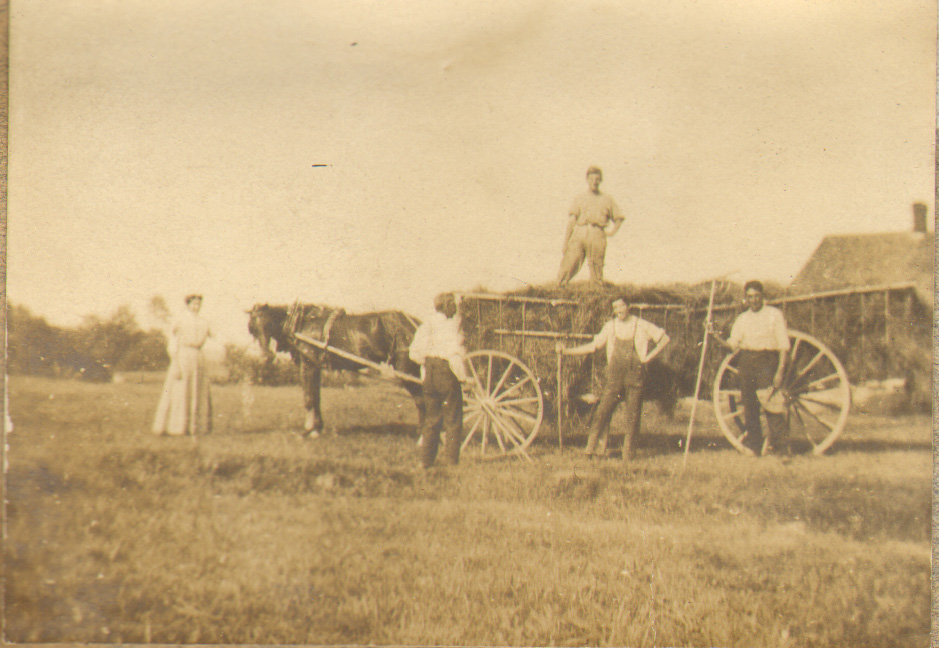
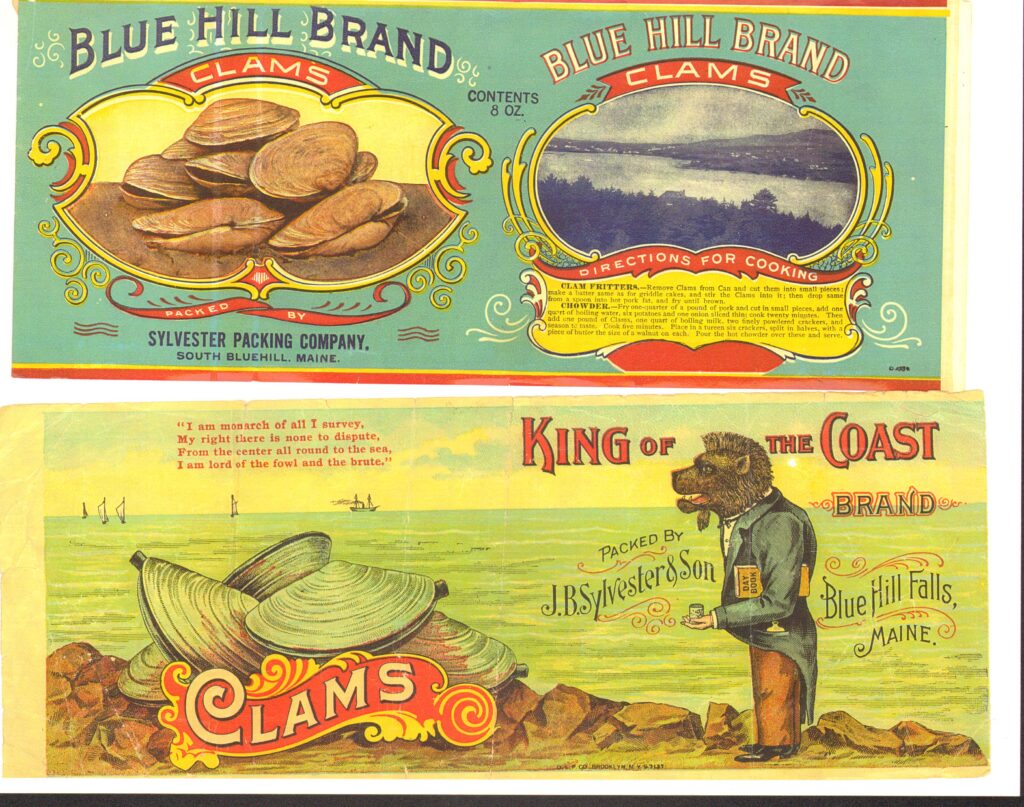
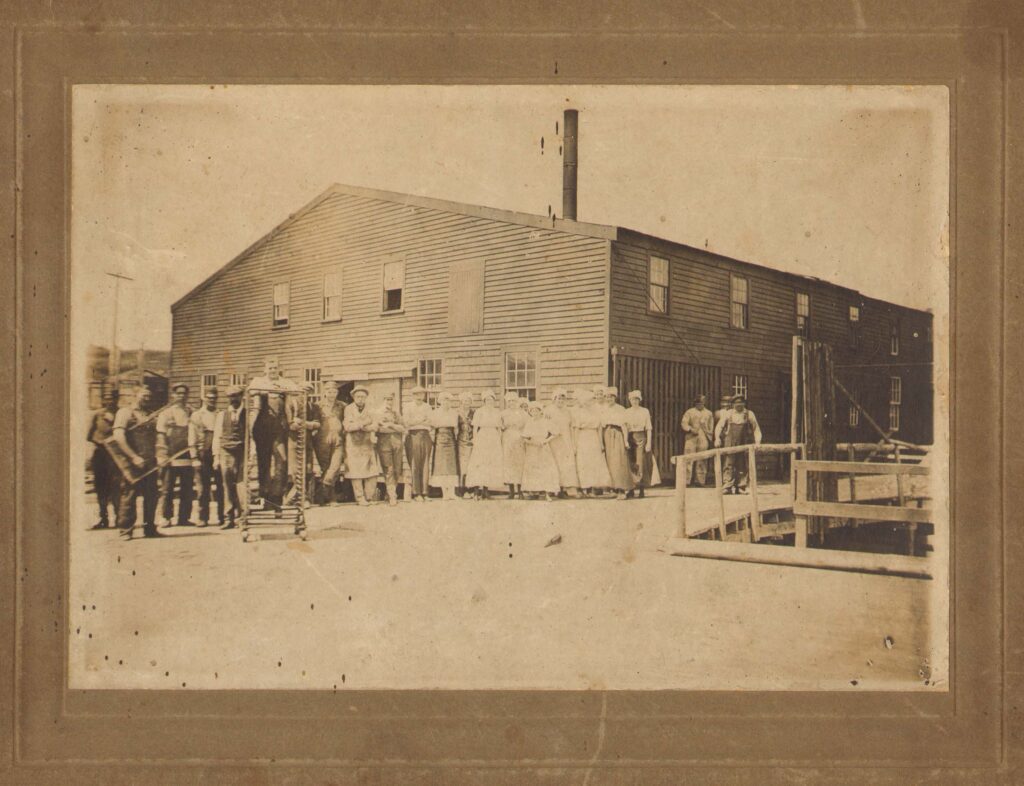
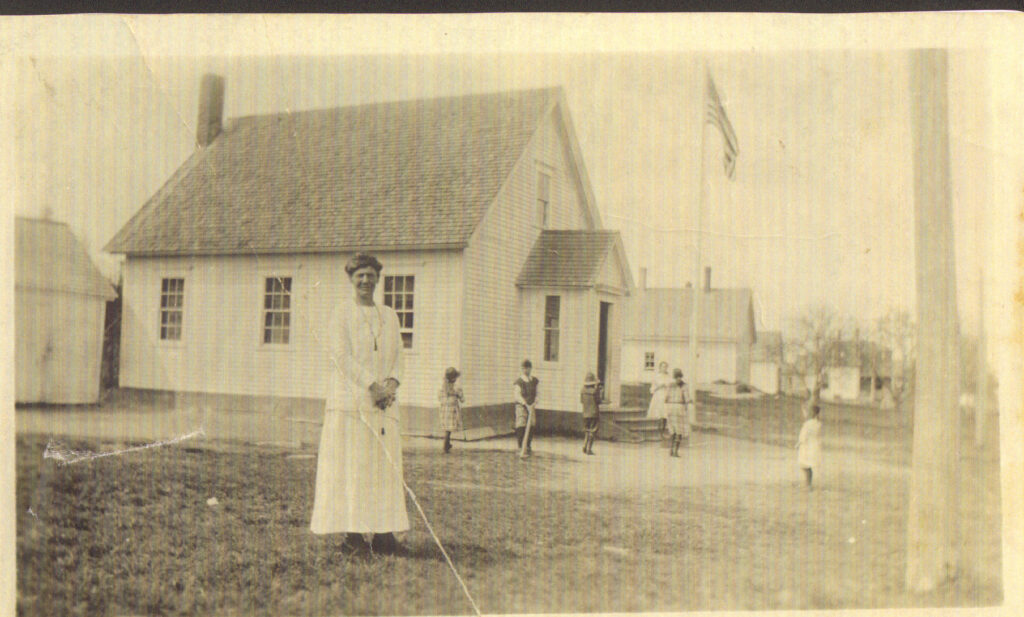
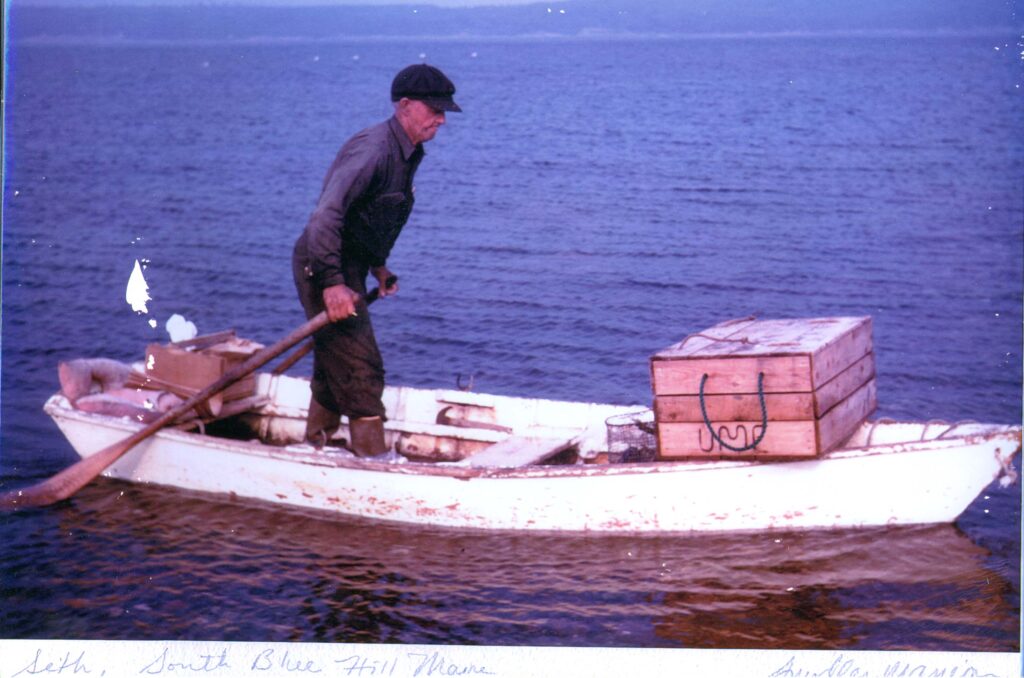
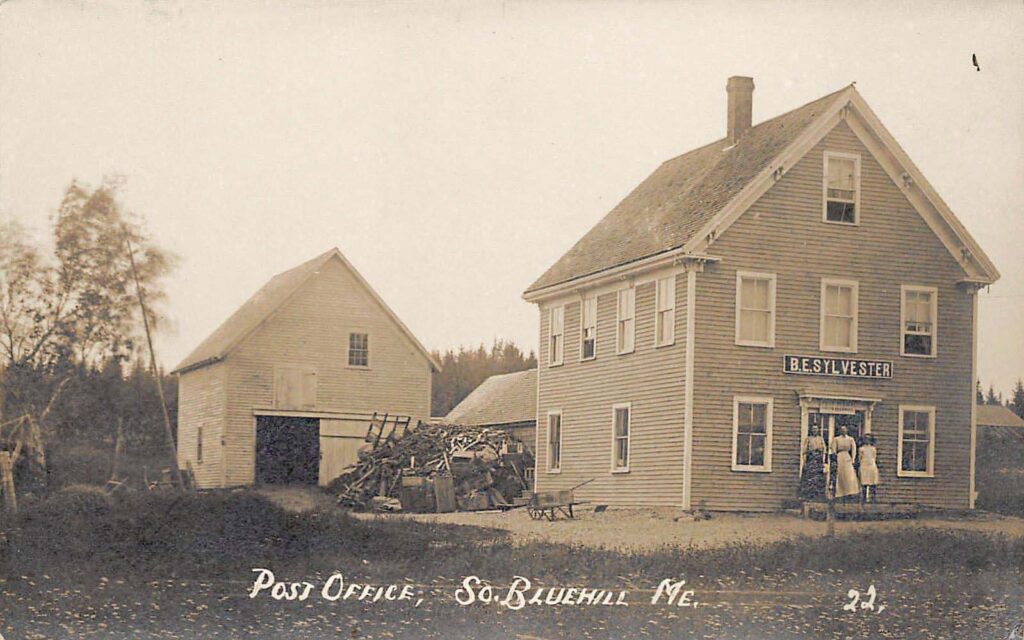
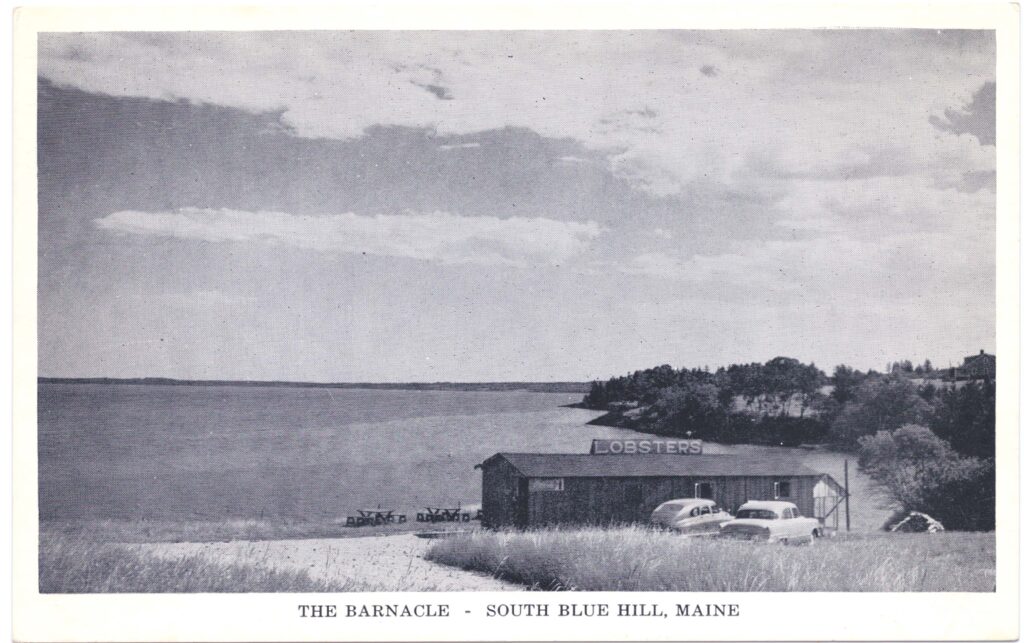
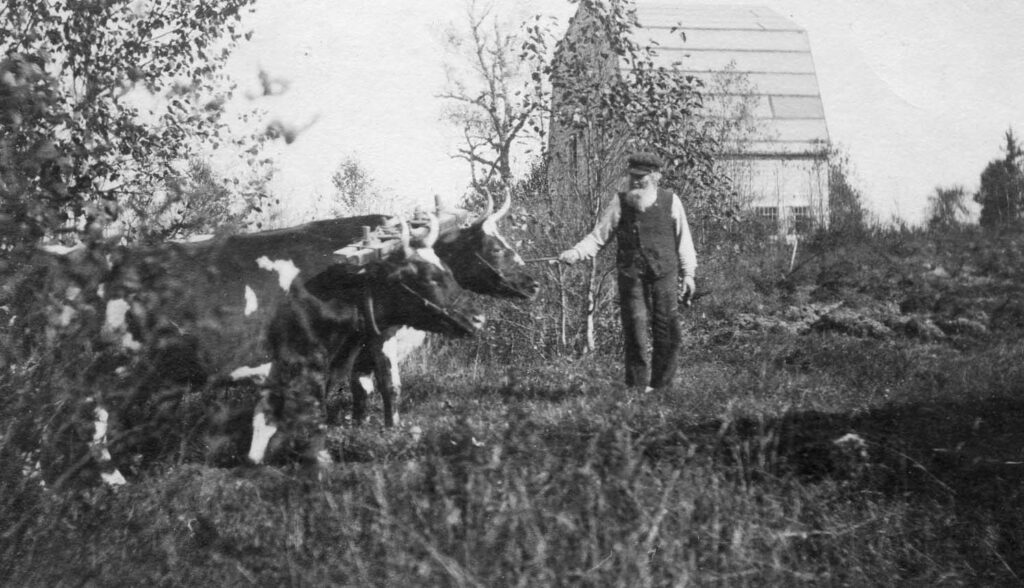
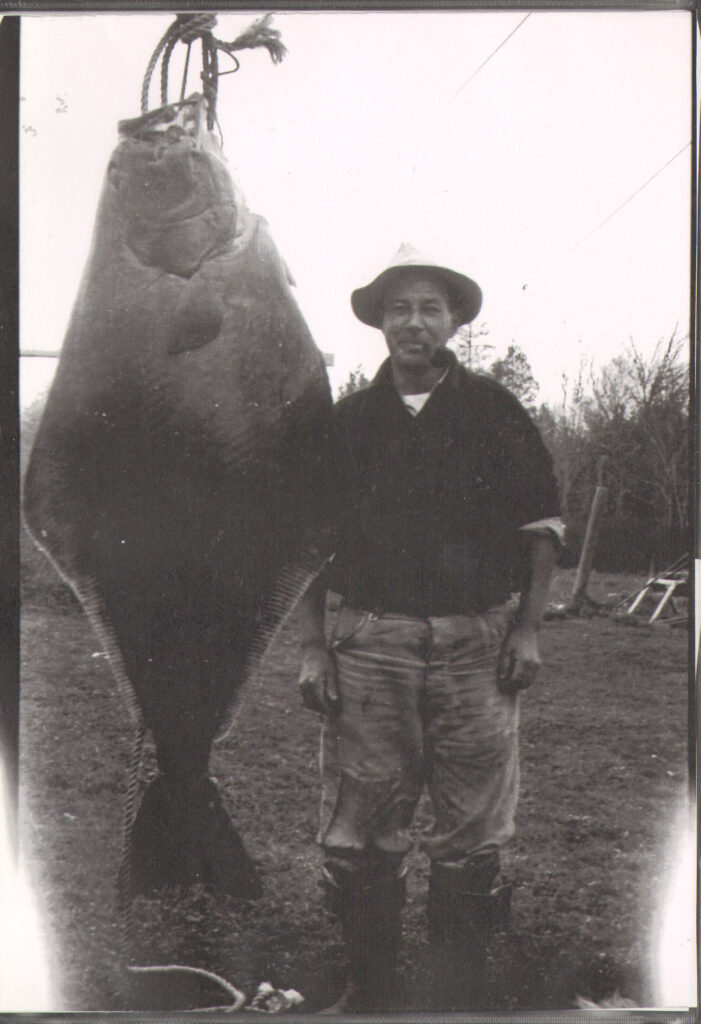
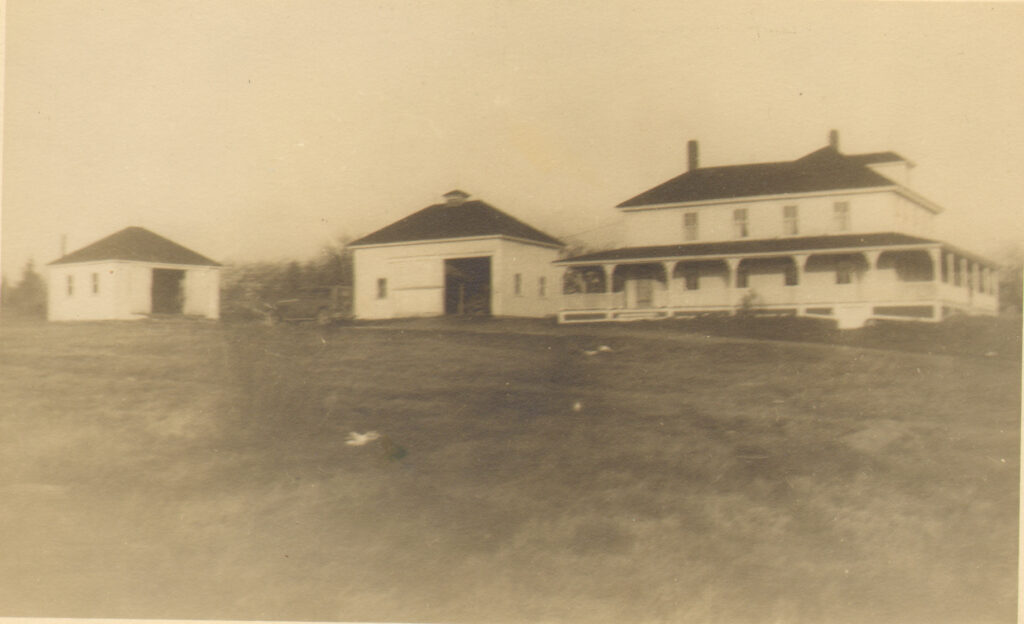
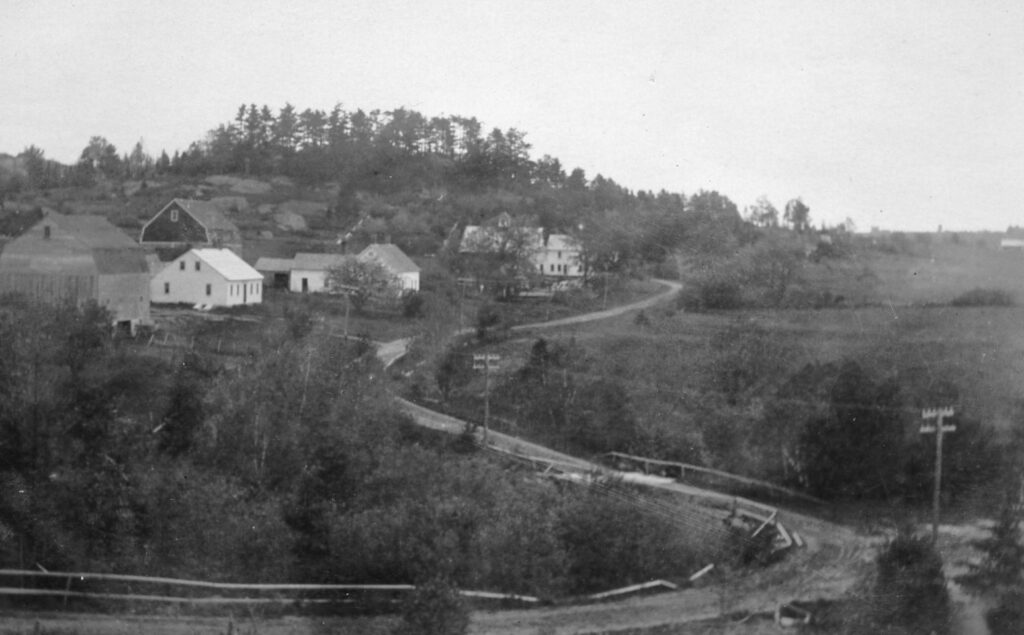
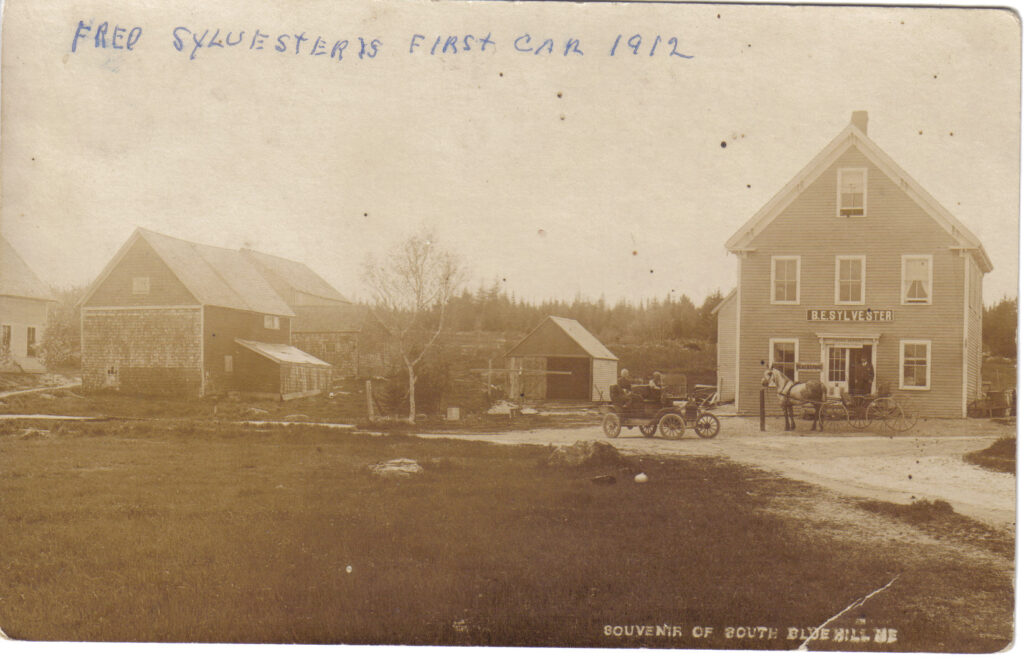
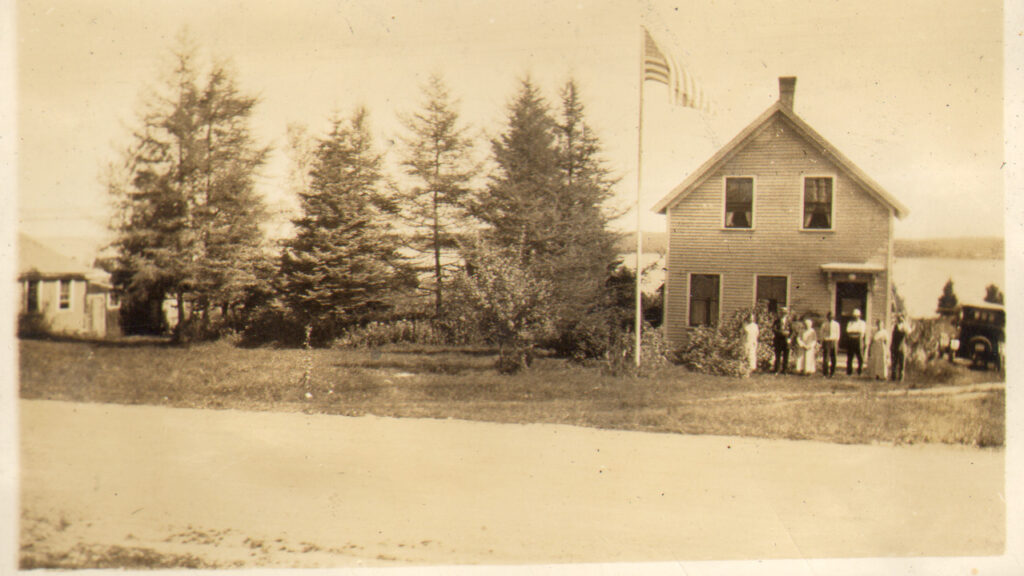
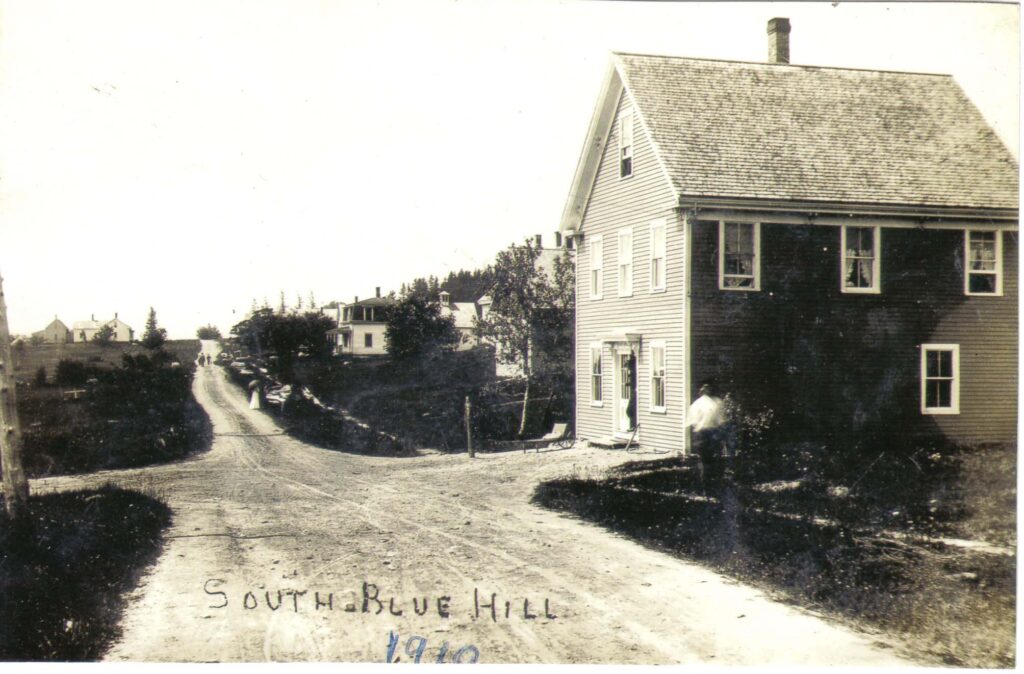
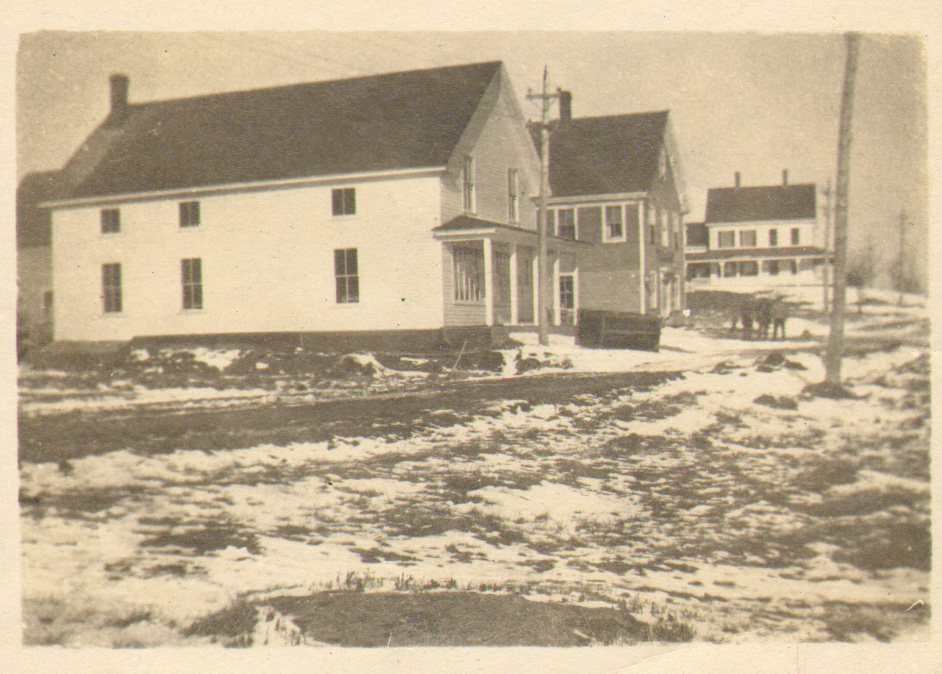
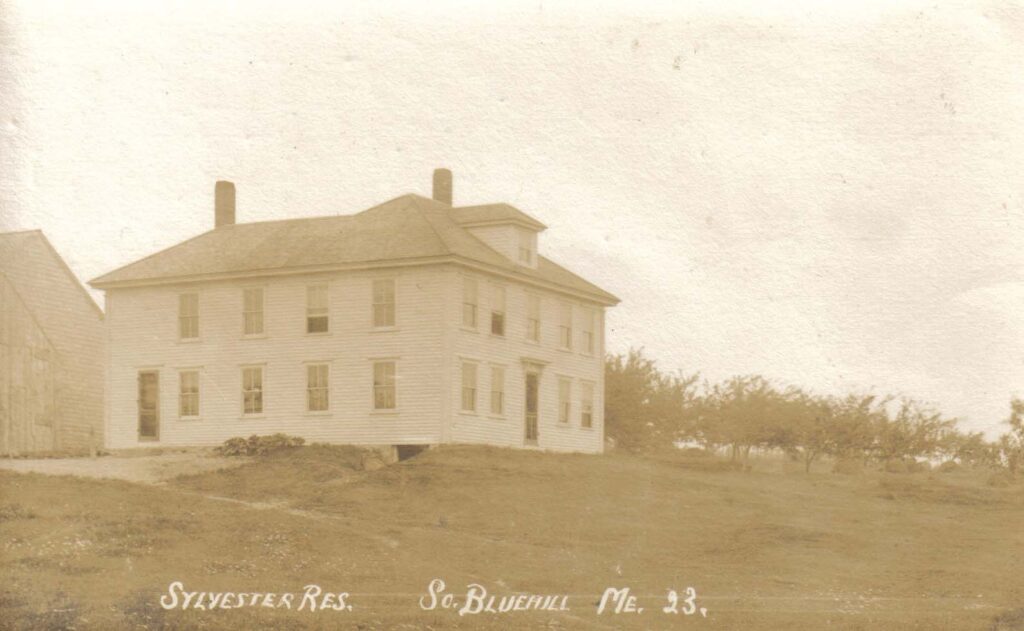
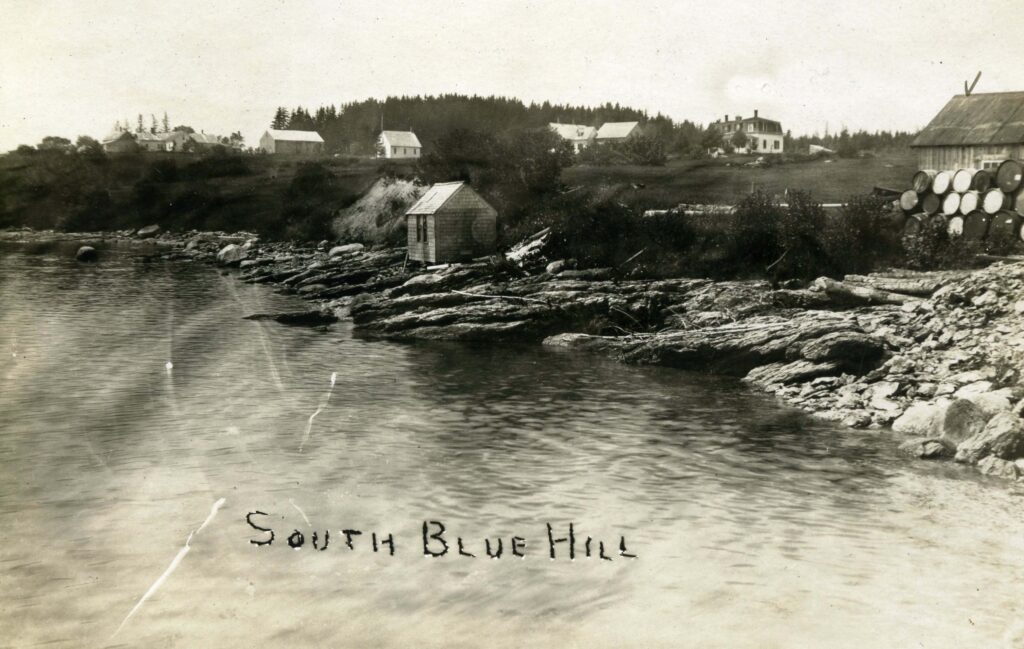
The history of LPIS is intimately tied to the South Blue Hill neighborhood, and membership in the organization is geographically based, encompassing all residents of the greater South Blue Hill area.
One of the most iconic views of South Blue Hill was the 1926 Falls Bridge, which was replaced in 2022. Learn more about the history of this local symbol, and see the film about its decomissioning.
For more local historical information, learn about the nearby Blue Hill Falls neighborhood.